Episode 29 - Ballots Over Bullets
Episode 29 covers the Election of 1800, when Thomas Jefferson and Aaron Burr each received more electoral votes than incumbent John Adams but tied with each other. The House of Representatives voted 36 times before choosing Jefferson, completing the first peaceful transfer of power between opposing political parties in American history. Students will understand why this election is called the Revolution of 1800.
Key Takeaways
Jefferson and Burr tied because the Constitution's original rules didn't distinguish between presidential and vice presidential electors. Each elector cast two votes without specifying which was for president.
Alexander Hamilton, who despised Jefferson, still urged Federalists to support him over Burr. He considered Burr more dangerous. Hamilton and Burr would duel four years later.
John Adams quietly left Washington before sunrise on inauguration day, not attending Jefferson's swearing-in. It was seen as a bitter rebuke.
The geographic split in the vote was stark: 86 percent of Adams's electoral votes came from the north, while nearly 75 percent of Jefferson's came from the south.
The 12th Amendment, ratified in 1804, fixed the flaw that caused the tie by requiring electors to cast separate ballots for president and vice president.
Sign up here to be the first to know about new History250 releases, content & resources!
FAQ - Frequently Asked Questions
Q1: Why did Jefferson and Burr tie in the Election of 1800?
The original Constitution gave each elector two votes for president, with no distinction between the presidential and vice presidential candidates. Democratic-Republican leaders had intended Burr to be the vice presidential pick and Jefferson the presidential one, but they failed to arrange for one elector to withhold his vote from Burr. As a result, both men received the same number of electoral votes. The 12th Amendment, ratified in 1804, required separate ballots for president and vice president to prevent this from happening again.
Q2: Why is the Election of 1800 called the Revolution of 1800?
Jefferson called it that in his own writings. He meant that it represented a transfer of power from one political philosophy to another through peaceful democratic means, something that had rarely if ever happened in modern history. Previous transfers of power in republics and democracies had often involved violence or collapse. The American election of 1800 showed that a constitutional system could survive a genuine change in political direction.
Q3: What did Hamilton have against Aaron Burr?
Hamilton believed Burr was completely unprincipled and motivated only by personal ambition. He had opposed Burr in New York politics for years and considered him willing to ally with any faction that served his interests. Hamilton saw Jefferson as wrong on policy but honest about his beliefs. Burr, he thought, would do anything to gain and hold power. Their feud culminated in a duel on July 11, 1804, in which Burr mortally wounded Hamilton.
Q4: Did John Adams do anything productive after losing the election?
In the final weeks of his presidency, Adams appointed a series of federal judges, including John Marshall as Chief Justice of the Supreme Court. These appointments, made quickly before Jefferson took office, became known as the 'midnight judges.' Marshall went on to serve for 34 years and shaped American constitutional law more profoundly than almost any other individual. It's one of Adams's most consequential acts, accomplished in defeat.
Q5: What was the significance of Jefferson's inauguration speech?
Jefferson's first inaugural address is considered one of the finest in American history. His line 'We are all Republicans, we are all Federalists' was an attempt to signal that despite the bitter election, he intended to govern for all Americans. He also outlined the principles he believed should guide the republic, including freedom of religion, freedom of the press, and limited government. It established a tone of reconciliation while making clear that Democratic-Republican principles would guide his administration.
A Nation Divided, a Party Fractured
On December 14th, 1799, George Washington died at his home in Mount Vernon. The new republic had lost its greatest citizen and a profound source of national unity. Less than a year later, America endured a bitter presidential election. It is known as the Revolution of 1800. The 1800 presidential election revealed deep division in the new American republic. When the results came in, 86% of the electoral votes for Adams were from the north. Nearly 75% of the electoral votes for Jefferson were from the south. National division was already in play during the administration of America's second president, John Adams. In the presidential election of 1796, Adams had won a narrow victory over his arch rival, Thomas Jefferson. Federalists favored a stronger central government and an urban economy. The Democratic Republican Party, which Jefferson founded in 1792, favored a smaller federal government, greater states' rights, and a more agrarian economy. Heading into the election of 1800, not only was the country divided along sharp political lines, the Federalist Party itself was internally divided. No Federalist was more vocal a critic of Adams than Alexander Hamilton.
In a long and hard-hitting letter to his party members, Hamilton questioned whether Adams was fit to be president, decrying what he called the disgusting egotism, the distempered jealousy, and the ungovernable indiscretion of Mr. Adams's temper. Intended only for fellow Federalists, the pamphlet fell into the hands of Democratic Republican Aaron Burr, who sent it into public circulation. The constitutional system being tested had been crafted just over a decade earlier, as we cover in our episode on the Constitutional Convention.
Thirty-Six Ballots
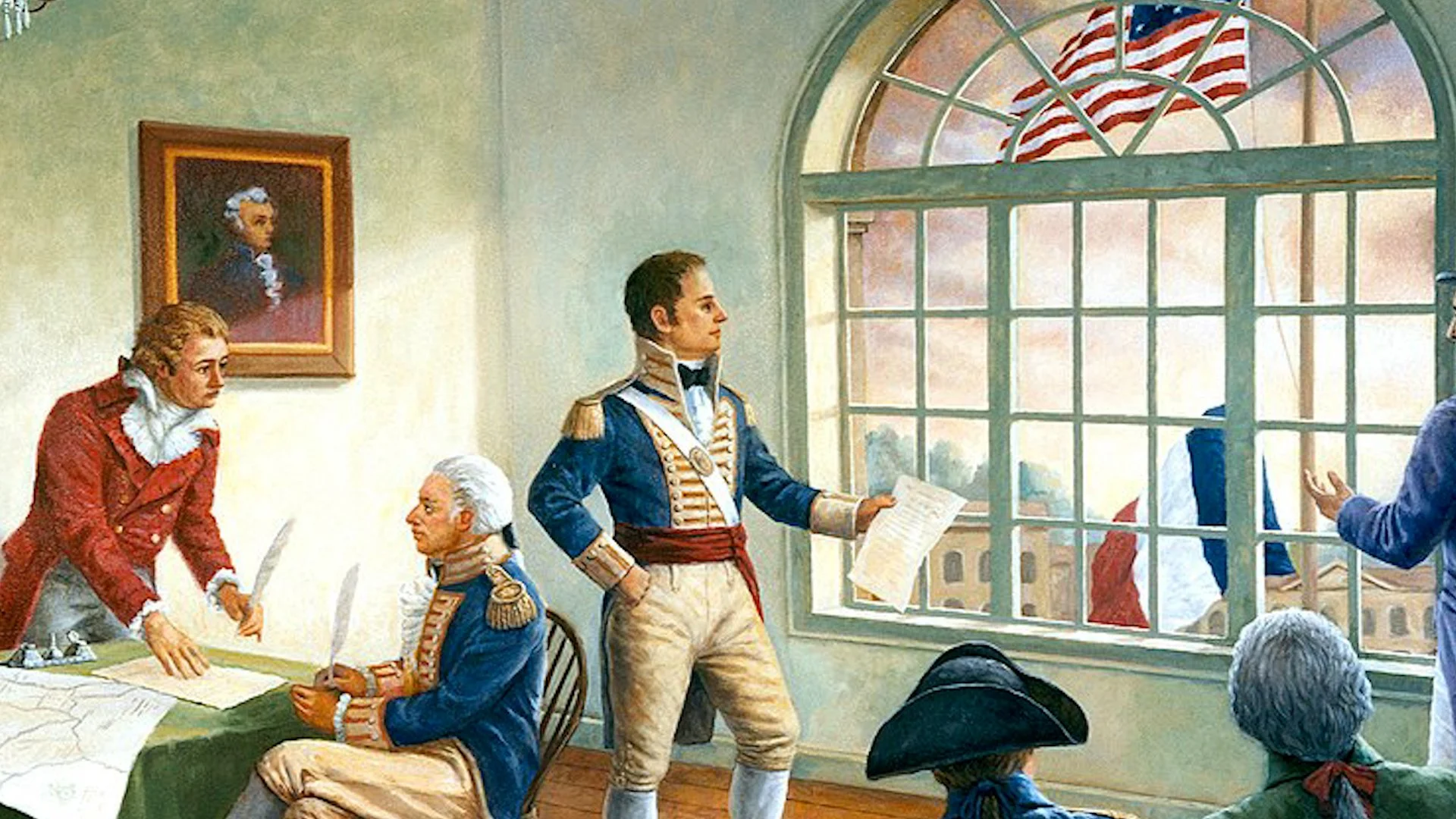
Votes cast were not differentiated as votes for president or vice president. When both Democratic Republicans, Thomas Jefferson and Aaron Burr, received an equal number of electoral votes, 73 each, more than Adams, the vote went to the House of Representatives, which at the time was controlled by the Federalists. On November 1st that year, incumbent John Adams moved into the newly built White House. On December 3rd, he lost his re-election campaign. Yet who the next president would be was not determined until late February of 1801. The voting in the House began on February 22nd, 1801, during a Washington snowstorm.
Over the next week, House members voted in 35 ballots. Every time, they were unsuccessful in breaking the tie. Finally, several Federalists, likely under the sway of Alexander Hamilton, decided to abstain from voting. Jefferson, they thought, was less dangerous than Aaron Burr. With ballot number 36, Thomas Jefferson was elected by the House of Representatives to be the third president of the United States. The Adams presidency had been consumed by the foreign crisis we cover in our episode on the XYZ Affair and Quasi-War with France.
The First Peaceful Transfer of Power
On March 4th, 1801, Jefferson, with Aaron Burr at his side, was inaugurated. This event marked the first peaceful transfer of power between opposing political parties in the new American republic. In a nod toward shared American principles and national unity, Jefferson declared in his inaugural address, "We are all Republicans. We are all Federalists." Significant changes followed his inauguration. Jefferson repealed the Alien and Sedition Acts. The 1803 Louisiana Purchase, executed under his administration, doubled the territorial size of the United States. By 1804, the conflict between Hamilton and Burr turned deadly. On July 11th, Burr shot and killed his rival in a duel at Weehawken, New Jersey.
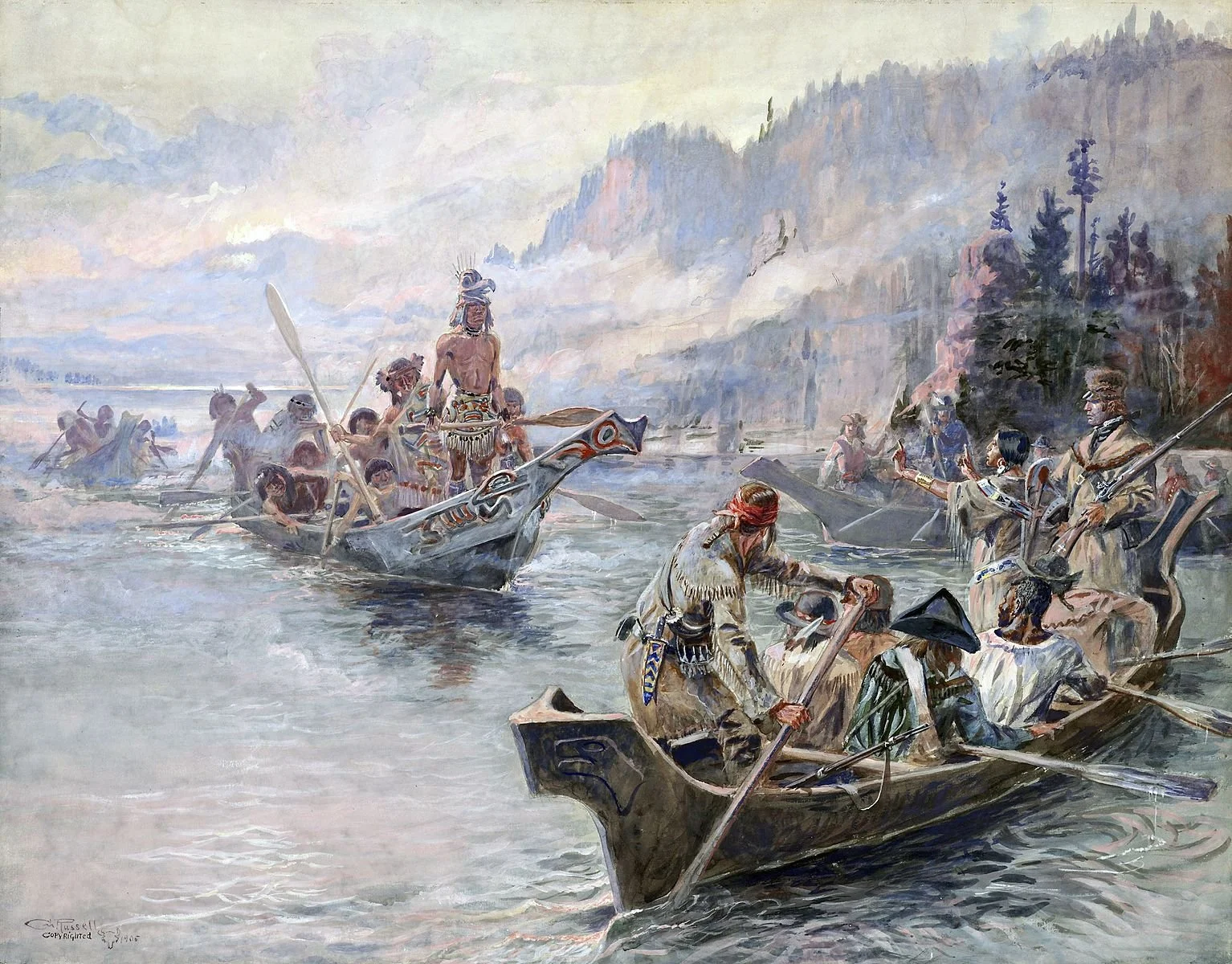
That same year, the 12th Amendment was ratified, forever preventing the kind of electoral quirk that forced the House vote between Jefferson and Burr. Under Jefferson's direction, in May of 1804, Meriwether Lewis and William Clark set out from St. Louis on their expedition, the Corps of Discovery. They reached what is now Portland, Oregon by November 1805. Jefferson's first term would be defined by the territorial expansion we cover in our episode on the Louisiana Purchase.