Episode 24 - America's First Great Naval Hero
John Paul Jones was born in Scotland, fled to Virginia after killing a mutineer, and became the founding figure of the American Navy. In September 1779, his badly damaged ship faced a superior British warship off the coast of England. When asked to surrender, he replied: 'I have not yet begun to fight.'
Key Takeaways
Jones was born John Paul in Scotland in 1747, fled to Virginia after killing a mutineer in Tobago, and took a new surname to hide his identity.
Before his famous battle, he helped convert merchant ships into warships, organized the first American naval fleet, and wrote two foundational manuals for the Continental Navy.
In September 1779, Jones's ship the Bonhomme Richard was nearly destroyed by the 50-gun British warship Serapis. Jones refused to surrender, saying 'I have not yet begun to fight.'
After four hours of combat, it was British Captain Pearson who surrendered. The Bonhomme Richard sank the following morning. Jones sailed the captured Serapis to the Netherlands.
Jones died in Paris in 1792. In 1905, at President Theodore Roosevelt's request, his remains were brought back to the US and interred at the Naval Academy in Annapolis.
Sign up here to be the first to know about new History250 releases, content & resources!
FAQ - Frequently Asked Questions
Q1: Why is John Paul Jones called the father of the American Navy?
Jones earned the title not just through his famous battle victories but through his foundational work building the Navy from scratch. He helped convert merchant ships into warships, organized the first American naval fleet, and wrote two key manuals for the Continental Navy. His raids on British coastal towns and ships also demonstrated that the American Navy could project power far from home.
Q2: What happened at the Battle of Flamborough Head?
On September 23, 1779, Jones's Bonhomme Richard engaged the British warship Serapis off the Yorkshire coast of England. The British guns nearly destroyed Jones's ship, but he refused to surrender. After four hours of brutal close-range fighting, British Captain Pearson surrendered instead. The Bonhomme Richard sank the next morning, and Jones sailed the captured Serapis to the Netherlands.
Q3: Did Jones ever actually say 'I have not yet begun to fight'?
The exact phrasing is disputed, but the sentiment is well-documented. Multiple accounts from that night describe Jones refusing to surrender even as his ship was devastated. The version that became famous, 'I have not yet begun to fight,' was recorded in accounts written after the battle. Jones never disputed it.
Q4: Why did John Paul Jones change his name?
He was born John Paul in Scotland. In 1773, while his ship was docked in Tobago, he killed a mutineer during a crew dispute. He fled the British legal system by traveling to Virginia, where he added the surname Jones to conceal his identity. He never publicly explained why he chose that name specifically.
Q5: Where is John Paul Jones buried?
Jones died in Paris in 1792 and was buried there. In 1905, at President Theodore Roosevelt's request, his remains were exhumed and returned to the United States. They were brought ashore in Maryland and eventually interred in 1913 in the crypt beneath the chapel at the United States Naval Academy in Annapolis, Maryland.
A Sailor Who Needed a New Name
John Paul Jones was born John Paul in Scotland in 1747. He went to sea at 12 and spent two decades rising through the British merchant marine. In 1773, he killed a mutineer on his ship while docked in Tobago. He fled to Virginia and assumed the name John Paul Jones to hide his identity.
The war found him quickly. From the Continental Navy's inception in 1775, Jones served as an adviser to its Naval Committee. He helped convert merchant vessels into warships, helped organize the first American naval fleet under Commodore Esek Hopkins, and authored two foundational manuals for the new Navy. America had only recently gained the formal French alliance whose backing made many of his exploits possible, as we cover in our episode on the Battle of Saratoga and the French alliance.
Early Commands and Raids on Britain
Starting in 1776, Jones commanded the sloop Providence and captured 16 British ships off the coast of Nova Scotia. Over the following two years, he captained the Ranger and conducted raids along the coast of England, bringing the war to British shores before his most famous battle. The French, impressed by his daring, gave him an aging merchant ship in 1779.
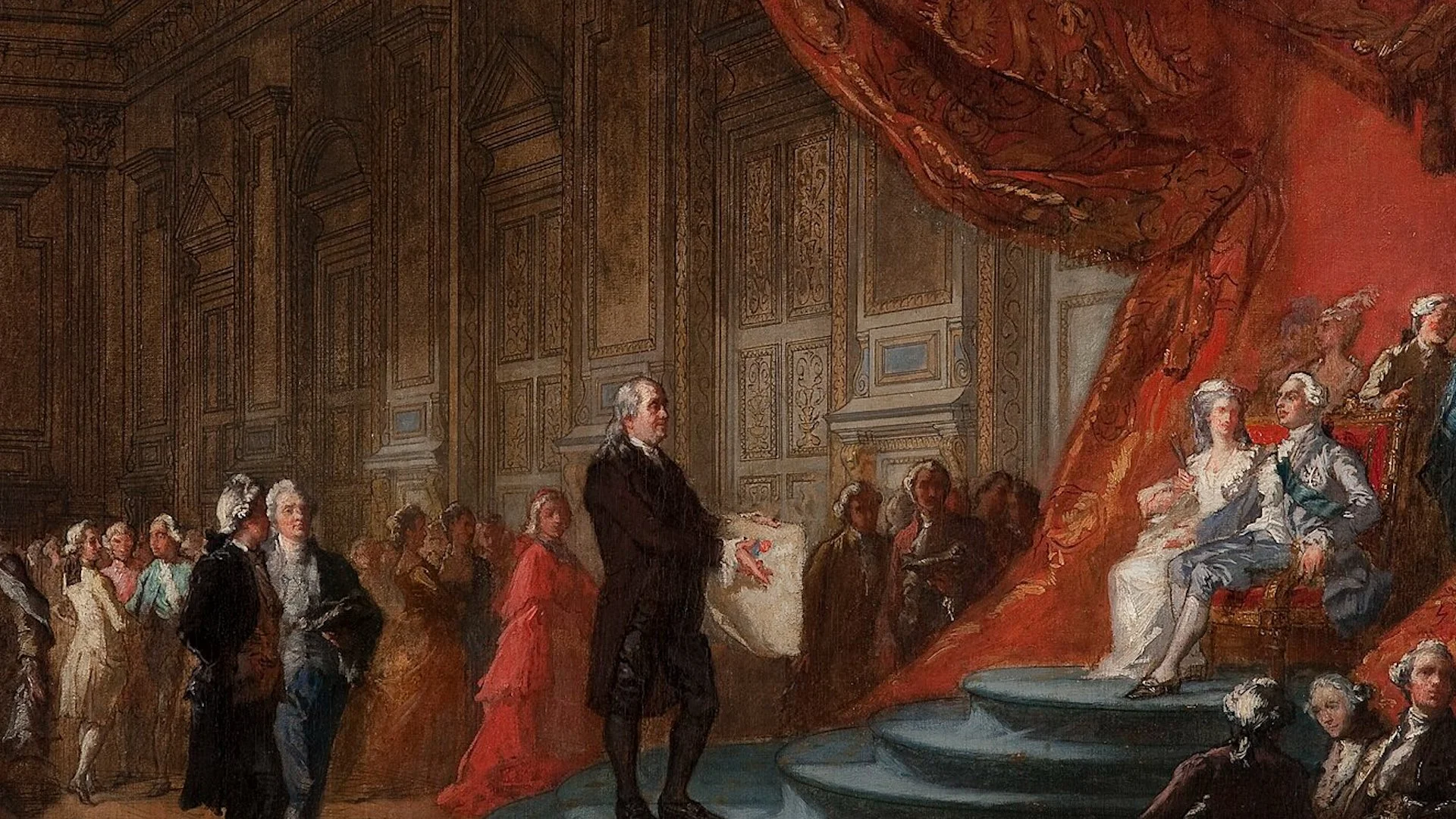
He converted it into a 42-gun warship and named it the Bonhomme Richard, in honor of Benjamin Franklin's Poor Richard's Almanac. The name meant 'Good Richard' in French, and the French were fond of Franklin's almanac sayings. The French alliance that made this possible had been secured the previous year. On land, Washington's army was rebuilding through the trials we cover in our episode on Valley Forge and Baron von Steuben.
I Have Not Yet Begun to Fight
On September 23, 1779, as night fell off the coast of Yorkshire, England, the Bonhomme Richard encountered the British 50-gun warship Serapis, commanded by Captain Richard Pearson.
The British guns devastated Jones's ship. As the two vessels drew close together, Pearson called for surrender. Jones famously replied, 'I have not yet begun to fight.' The ships locked together and the fight shifted to small arms and hand-to-hand combat. Four hours of ferocious fighting followed. The Americans drove the British below deck. Fires broke out on both ships. In the end, it was Pearson who surrendered. The following morning, what remained of the Bonhomme Richard sank off the English coast. Jones sailed the captured Serapis to Texel, a small Dutch island.
Celebrity, Then a Long Way Home
In France, the Netherlands, and America, Jones became a celebrity. Thomas Jefferson and others celebrated him. After the Revolution, he briefly served Empress Catherine the Great as a rear admiral in the Russian Navy. In 1789, he moved to Paris, where he died in 1792. His story didn't end there. In April 1905, 113 years after his death, President Theodore Roosevelt requested that Jones's remains be exhumed from their Parisian grave.
His coffin was processed down the Champs-Élysées, transported to America aboard the USS Brooklyn, and brought ashore in Maryland on July 23, 1905. In 1913, America's first great naval hero was laid to final rest in the crypt beneath the chapel at the United States Naval Academy in Annapolis. The decisive land-and-sea victory that would end the Revolution is the subject of our episode on the siege of Yorktown.