Episode 59 - Grant's Rise
Halfway through 1863, Lincoln was running out of generals in the East. In the West, a former failed civilian named Ulysses S. Grant was winning. From his blunt four-word reply at Fort Donelson, to Shiloh, to the surrender of Vicksburg on July 4, 1863, Grant's rise gave the Union control of the Mississippi River and gave Lincoln the general he had been waiting for.
Key Takeaways
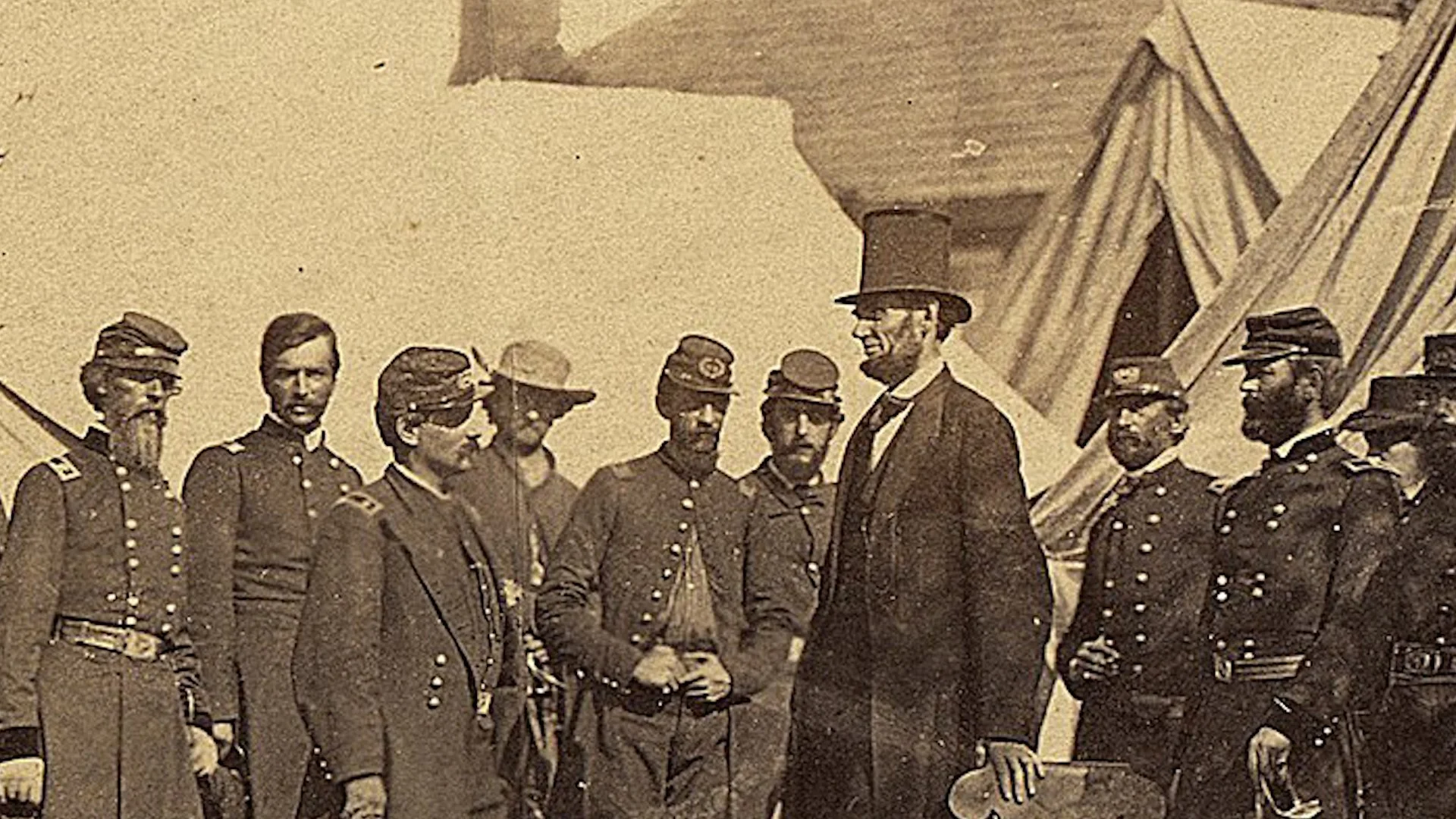
By mid-1863, Lincoln was deeply frustrated with his Eastern commanders. McClellan failed to pursue Lee after Antietam. Meade failed to pursue him after Gettysburg. In the West, Ulysses S. Grant showed none of that caution.
Grant came from nothing as a soldier. After West Point and the Mexican-American War he failed at farming, selling firewood, and bill collecting before ending up at his father's leather shop in Galena, Illinois. He accepted a volunteer commission within months of the war's outbreak in April 1861.
At Fort Donelson in February 1862, Confederate commander Simon Bolivar Buckner (Grant's old West Point friend) sent a request to discuss surrender terms. Grant's reply: "No terms except an unconditional and immediate surrender can be accepted." The press named him "Unconditional Surrender Grant."
The Vicksburg campaign in spring 1863 was Grant at his most audacious. He ran his gunboats past Confederate batteries at night, marched his army down the Louisiana side of the river, and crossed at Bruinsburg with help from Grierson's cavalry raid and a Sherman diversion. He then beat the Confederates at Jackson, Champion's Hill, and Big Black River Bridge.
At Milliken's Bend, Black Union troops repelled a Confederate attack on Grant's supply lines, an early demonstration of the combat role Black soldiers would play in the rest of the war.
Vicksburg surrendered on July 4, 1863. Grant paroled Pemberton's roughly 30,000 men rather than transport them as prisoners, then distributed Union rations to starving rebel soldiers and citizens. The Union now controlled the Mississippi. Lincoln told a friend the next day: "Grant is my man, and I am his, the rest of the war."
Sign up here to be the first to know about new History250 releases, content & resources!
Questions & Answers (FAQ):
Q1: How did Ulysses S. Grant get his nickname "Unconditional Surrender Grant"?
At Fort Donelson in February 1862, Confederate commander Simon Bolivar Buckner (an old West Point friend of Grant's) sent a request to discuss surrender terms. Grant replied: "No terms except an unconditional and immediate surrender can be accepted." Buckner called it "ungenerous and unchivalrous" but surrendered. Northern newspapers ran with the line, and the press began calling him "Unconditional Surrender Grant." The initials matched his actual name (U.S. Grant), which made it stick.
Q2: What did Grant do before the Civil War?
Grant graduated from West Point in 1843 and served as a quartermaster in the Mexican-American War, which became his training ground for managing supply lines. After the war, he failed at civilian life: he tried farming on land owned by his wife Julia's family, selling firewood, and bill collecting. None of it worked. He ended up clerking at his father's leather shop in Galena, Illinois, where he was working when the Civil War broke out in April 1861.
Q3: Why was Vicksburg so hard to take?
Vicksburg sat on rocky bluffs above the Mississippi River. Confederate batteries on those bluffs could destroy any Union force trying to attack from the river below. The Confederates called it the "Gibraltar of the West" for that reason. Grant's solution was to get his army onto dry land east of Vicksburg, where they could attack the city from the rear. He did it by running his gunboats past the batteries at night, marching his army down the Louisiana side of the river, and crossing at Bruinsburg to the south.
Q4: Why did Grant parole 30,000 Confederate prisoners after Vicksburg surrendered?
Grant initially demanded unconditional surrender (his usual approach). Then he reconsidered. Transporting 30,000 captives north would have tied up enormous Union resources. Instead, on July 4, 1863 he paroled Pemberton's men, meaning they pledged not to fight again until formally exchanged. Many never reentered Confederate service. Grant's troops also distributed Union rations to starving Confederate soldiers and Vicksburg's civilians.
Q5: Why did Lincoln say "Grant is my man"?
On July 5, 1863, the day after Vicksburg's surrender, Lincoln told a friend: "Grant is my man, and I am his, the rest of the war." Lincoln had spent the war cycling through cautious Eastern commanders (McClellan, Burnside, Hooker, Meade) who failed to press their advantages against Lee. Grant's aggressive Vicksburg campaign was the kind of campaigning Lincoln had been waiting for. The remark was effectively Lincoln's promise that Grant would not be replaced. Grant was promoted to lieutenant general and given command of all Union armies the following March.
Lincoln's Frustration with His Eastern Generals
Halfway through 1863, President Lincoln was deeply frustrated with the Union's military leadership in the Eastern Campaign. After fighting to a standstill at Antietam, General McClellan failed to follow Lee as he retreated back into Virginia. After defeating Lee at Gettysburg, General Meade failed to follow the now flagging Confederate army as it once again moved south across the Potomac. In his home state of Virginia, Lee seemed invincible, having won every major battle there against the North. When Lincoln looked West, the picture was different. There, a native Ohioan showed none of the caution that plagued the Eastern campaign. That leader was Ulysses S. Grant, and his star was on the rise.
Hiram Ulysses Grant: Ohio, West Point, and the Mexican-American War
Hiram Ulysses Grant was born in Point Pleasant, Ohio on April 27, 1822. His father, Jesse Root Grant, was a tanner and like many in the north, prospered in the middling economy along the Ohio River Valley. Grant attended West Point. The congressman who nominated him, Thomas Hamer, mistakenly wrote his name as Ulysses S. Grant, and the name stuck. Even as a youth, Grant was an exceptional equestrian.
At West Point he was the finest of horsemen, and but for his class rank, 21 out of 39, and a shortage of vacancies, he was destined for the elite U.S. Cavalry. Instead, he was assigned to the infantry. During the Mexican-American War Grant served as a quartermaster, which proved an invaluable training ground, as he perfected the arts of planning and establishing supply lines, keeping an army moving and fighting.
Pre-War Failures and the Family Leather Shop
The war ended in 1848. Six years later Grant returned to civilian life and generally failed at each venture he tried: as a farmer working land owned by the family of his wife Julia, selling firewood, and as a bill collector. He procured steady work in his father's leatherworks store in Galena, Illinois. Grant cared little for the work.
Then, in April of 1861, the war broke out, and Grant soon accepted a commission as Lieutenant Colonel in the volunteer army. Two months later he was promoted to Brigadier General, a rank he kept for most of the first year of the war.
Fort Donelson and "Unconditional Surrender Grant"
Grant first caught the president's attention with a victory at Fort Donelson, a battle won over the course of six days in mid-February 1862. When Confederate commander Simon Bolivar Buckner, a longtime friend of Grant's from West Point days, sent a request to discuss surrender terms, his Northern counterpart replied: "No terms except an unconditional and immediate surrender can be accepted."
Shortly after receiving Grant's blunt reply, what Buckner called "ungenerous and unchivalrous," the rebel general surrendered. Lincoln promoted Grant to Major General. Newspapers began referring to General Ulysses S. Grant as "Unconditional Surrender Grant." A little less than two months later, Grant won the Battle of Shiloh, securing the Tennessee River and opening up the South to Northern invasion.
The Vicksburg Problem: The "Gibraltar of the West"
There was one great prize, however, that eluded Grant for some time: Vicksburg, Mississippi. His first attempt to take the city in November and December of 1862 failed. Then came a string of victorious Mississippi River campaigns in 1863, culminating in Vicksburg. The city, with its rocky bluffs, seemed impenetrable. The Confederates called it the "Gibraltar of the West." Grant knew he had to get the Union forces to fight at Vicksburg on dry land, not from the river below the city's bluffs. For campaign maps showing the geography of the Vicksburg approach, visit the HISTORY250® maps library.
Running the Gunboats and Crossing at Bruinsburg
Grant's gunboats sailed from the north past the Confederate battery barrage to a point south of Vicksburg, while he marched his men down the Louisiana side of the Mississippi. On April 30, Grant's army successfully crossed at Bruinsburg, Mississippi without opposition, thanks in large part to General Benjamin Grierson's cavalry raid on the Confederate rear and a diversion by Sherman's men above Vicksburg.
Jackson, Champion's Hill, and Big Black River Bridge
On May 14, Grant's men crushed the Confederates at Jackson, some forty-five miles east of Vicksburg. The rebels there were led by General Joseph Johnston. After the Union win, Sherman's men burned much of the city, which became known as "Chimneyville." What was left of Johnston's army was now north of Jackson. He told the commander at Vicksburg, General John C. Pemberton, to come to him so they could join forces and confront Grant together. Pemberton disagreed and stayed to defend Vicksburg. On May 16 his army clashed with Grant's at Champion's Hill, then again the next day at the Battle of Big Black River Bridge. Grant's victories were decisive. Pemberton retreated into the city. Now, the Confederate army was besieged along with the citizens of Vicksburg.
The Siege and Milliken's Bend
Over the next six weeks, Union forces bombarded Vicksburg as soldiers and civilians ran out of food. Confederate forces sent in from Louisiana attacked Union supply lines at Milliken's Bend but were repelled, notably by Black Union troops. Vicksburg grew desperate. Johnston did not think he could save the city. When he finally made a move against Sherman, who was ordered to defend Grant's rear flank, he lacked sufficient troop strength. Inside Vicksburg, Pemberton's men were starving and incapable of mustering a major assault.
Vicksburg Surrenders on July 4, 1863
The Confederate general asked for terms from Grant, who at first wanted unconditional surrender. But then he changed his mind, not wanting to deal with transporting 30,000 rebel captives. Instead, after the surrender on July 4, he paroled Pemberton's men. Northern troops entered the city. Among other things, they distributed rations to the Confederate soldiers and food supplies to the citizens. Johnston escaped with what was left of his army. But the Union now controlled the Mississippi.
"Grant Is My Man": Lincoln Finds His General
On July 5, Lincoln declared, "Grant is my man, and I am his, the rest of the war." Vicksburg, paired with the Union victory at Gettysburg one day earlier, marked the strategic turning point of the war. Grant would soon be called east to take overall command of the Union armies, the appointment Lincoln had been searching for since the war began. For the full HISTORY250® documentary series on the American Civil War, visit the series index.