Episode 35 - A Fire Bell in the Night
Episode 35 covers the Missouri Compromise of 1820, the first major legislative attempt to manage the spread of slavery in America's expanding territory. It traces the crisis from Missouri's application for statehood through Henry Clay's compromise and Thomas Jefferson's frightened response. Students will see how the slavery debate that would eventually cause the Civil War first reached a national breaking point in 1820.
Key Takeaways
In 1800, there were about 1 million enslaved people in America. By the time of the Civil War, that number had grown to nearly 4 million.
The Northwest Ordinance of 1787 had already prohibited slavery in the territory that became Ohio, Indiana, Illinois, Michigan, Wisconsin, and parts of Minnesota, establishing a precedent for restricting slavery's geographic reach.
Missouri's application as a slave state broke the existing balance: there were 11 free states and 11 slave states in the Senate at the time.
The compromise line at 36 degrees 30 minutes latitude held for 34 years, until the Kansas-Nebraska Act of 1854 repealed it.
Jefferson's phrase 'a fire bell in the night' expressed his terror that the compromise had only postponed a violent reckoning rather than prevented one. He was right.
Sign up here to be the first to know about new History250 releases, content & resources!
FAQ - Frequently Asked Questions
Q1: What was the Missouri Compromise and what did it actually do?
The Missouri Compromise was a legislative agreement passed by Congress in 1820. It admitted Missouri as a slave state and Maine as a free state simultaneously, preserving the Senate's equal balance between slave and free states. It also drew a line through the remaining Louisiana Territory at 36 degrees 30 minutes north latitude, prohibiting slavery in any new states formed above that line. It resolved the immediate crisis while leaving the fundamental conflict unresolved.
Q2: Why did Missouri's statehood cause such a crisis?
Missouri's application broke the existing balance. The Senate had 11 free-state senators and 11 slave-state senators, giving each section equal power to block legislation it opposed. Admitting Missouri as a slave state would have given the slave states a Senate majority. Northern members saw this as a permanent shift in power toward slavery's defenders. The debate forced Congress to confront, for the first time, a direct question about whether slavery would expand into new American territory.
Q3: Who was Henry Clay and why is he called the Great Compromiser?
Henry Clay was a Kentucky senator and congressman who served in Congress for decades and played a central role in three major sectional compromises: the Missouri Compromise of 1820, the Compromise Tariff of 1833, and the Compromise of 1850. He believed the union depended on keeping northern and southern interests balanced enough that neither side would choose secession over accommodation. His ability to construct deals from incompatible positions earned him the nickname the Great Compromiser.
Q4: What was the Northwest Ordinance and why does it matter for this story?
The Northwest Ordinance of 1787 organized the territory north of the Ohio River, what is now Ohio, Indiana, Illinois, Michigan, and Wisconsin, and explicitly prohibited slavery there. It was significant because it established that Congress could restrict slavery in federal territories. Southern members in 1820 argued that applying similar restrictions to Missouri, which was applying as a full state rather than a territory, was unconstitutional. The distinction between territorial and state restrictions became central to every slavery debate that followed.
Q5: Why did the Kansas-Nebraska Act of 1854 matter so much?
The Kansas-Nebraska Act, promoted by Illinois Senator Stephen Douglas, organized two new territories and allowed their settlers to vote on whether to permit slavery, regardless of the Missouri Compromise line. This repealed the 1820 compromise that had held the sectional truce for 34 years. The repeal outraged northerners, accelerated the collapse of the Whig Party, helped create the Republican Party, and made the violence known as 'Bleeding Kansas' possible. It set the political chain of events that led to Lincoln's election and southern secession.
Slavery Grows and America Expands West
In 1800, there were close to 1 million slaves in America. There would be just under 4 million slaves by the time of the Civil War. In the first two decades of the same century, America expanded west. So did the national division over slavery. In 1783, the original 13 colonies gained their independence from England. Immediately, they faced the need to organize lands that belonged to America but were not yet states.
In 1787, Congress passed the Northwest Ordinance, intended to create territories within U.S. boundaries. The ordinance prohibited slavery in present-day Ohio, Indiana, Illinois, Michigan, Wisconsin, and parts of Minnesota, altogether what was called the Northwest Territory. This early legislative action set a precedent for restricting the expansion of slavery in new territories. In 1803, the Louisiana Purchase doubled the size of the United States. It also raised questions about whether slavery would be allowed in the newly acquired western lands. The territory at the center of the dispute had been acquired only seventeen years earlier, as we cover in our episode on the Louisiana Purchase.
Missouri Applies for Statehood
In 1818, Missouri applied for statehood as a slave state. Slavery had been introduced to the region in 1720 when Philippe François Renault brought 500 black slaves up the Mississippi River to work lead mines in Missouri and Illinois. Now, Missourians sought to protect the right to own slaves as they applied to become a state. In 1819, Representative James Tallmadge Jr. of New York proposed an amendment to the Missouri statehood bill. The amendment aimed to prohibit the further introduction of slaves into Missouri and declare all children born into slavery there free at the age of 25. The Tallmadge proposal ignited a fierce debate in Congress. After the War of 1812, there had been nearly a decade of domestic peace, what was called the era of good feelings in America. That period of unity came to an abrupt and shocking end. Georgia Representative Thomas W. Cobb openly warned Tallmadge that he had kindled a fire which only seas of blood could extinguish, a blatant threat of civil war. The country had just emerged from the conflict we cover in our episode on the War of 1812.
Henry Clay's Three-Part Compromise
The Missouri Compromise was largely written by Henry Clay, a Kentuckian and a member of the Democratic-Republican Party.
The Compromise was enacted in 1820 without the Tallmadge Amendment, which would have restricted slaveholders in Missouri. It encompassed three main provisions. First, Missouri was admitted as a slave state. Second, to maintain the balance in the Senate, Maine, which had been part of Massachusetts, was admitted as a free state. Third, and perhaps most significantly, a dividing line was drawn across the Louisiana Purchase territory. North of the line, slavery was prohibited in territories and future states, with the exception of Missouri itself. South of the line, slavery was permitted. While the Missouri Compromise temporarily diffused the immediate crisis, it did not resolve the fundamental issue of slavery. It merely postponed a larger confrontation, setting a precedent for future debates over the expansion of slavery. In 1821, Missouri officially became the 24th state of the United States.
A Firebell in the Night
The compromise's geographical division highlighted the growing north-south division within the country. An aging Thomas Jefferson described the acrimony that struck at the heart of the country's unity as a firebell in the night. The former president gloomily predicted that the compromise would be the end of the republic. Mounting tensions surrounding slavery's expansion had been temporarily relieved.
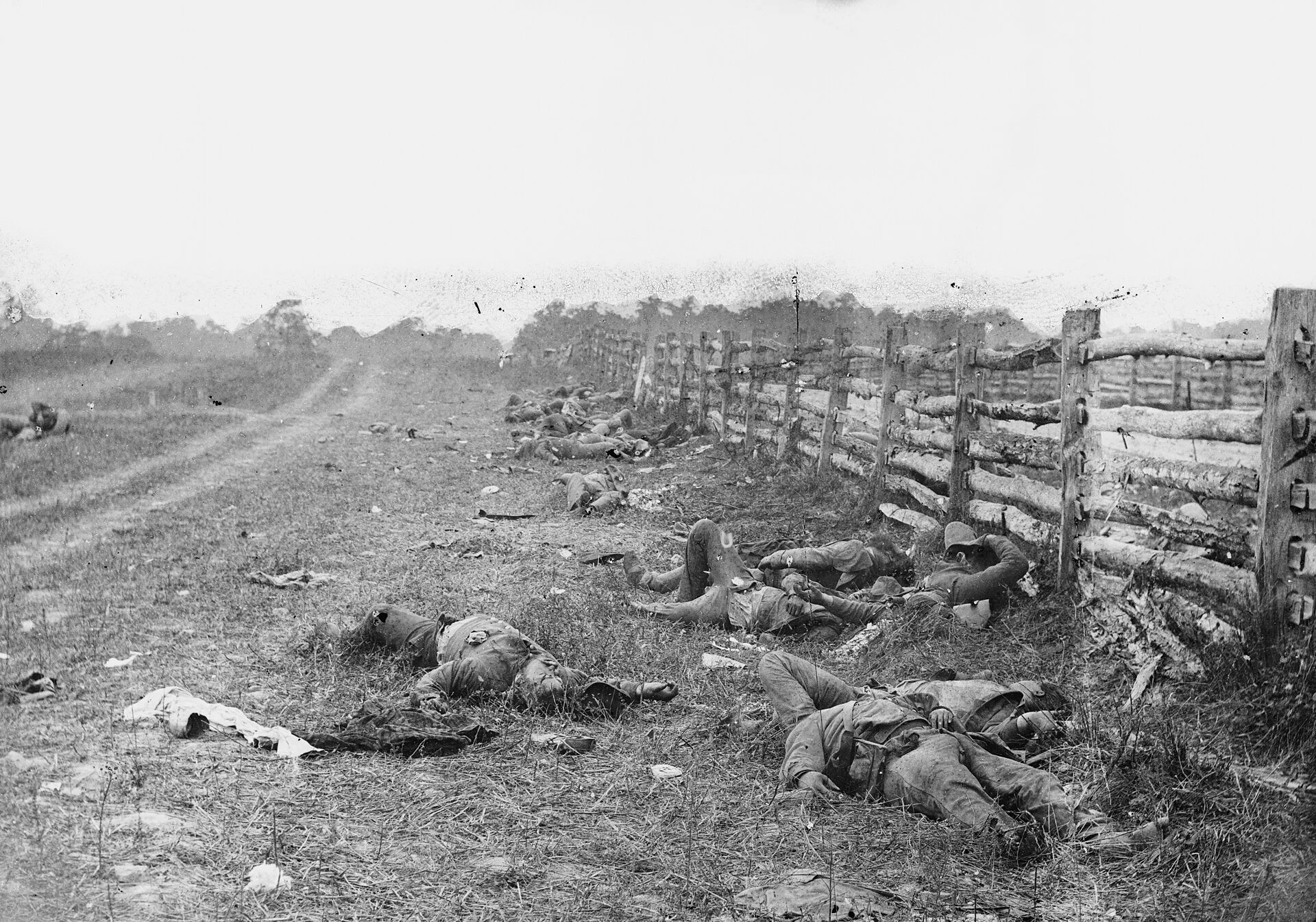
Alas, neither the law nor the peace would hold. In 1857, in the Dred Scott decision, the Missouri Compromise was declared null and void. Congress had no authority, the Supreme Court ruled, to ban slavery in any American territory. Six years later, after 30 hours of bombardment, Federal Officer Major Robert Anderson surrendered Fort Sumter to Confederate General P.G.T. Beauregard. America had run dry on compromise. Fort Sumter would prove to be the first battle in the only war in all of history to end slavery. The deeper contradictions between American liberty and American slavery are the subject of our episode on America's paradox of slavery and freedom.