Episode 34 - The Second War of Independence
Episode 34 covers the War of 1812, America's first declared war against a foreign nation, fought against Britain over trade blockades, impressment of sailors, and British support for Native resistance on the frontier. Students will trace the war from early disasters through the burning of Washington to Andrew Jackson's lopsided victory at New Orleans.
Key Takeaways
Britain impressed thousands of American sailors into the Royal Navy, which meant seizing them from American ships and forcing them to serve, a practice Americans found intolerable.
The USS Constitution defeated the HMS Guerriere on August 19, 1812, giving the young American navy its first major victory and earning the nickname 'Old Ironsides' when British cannon shot reportedly bounced off her hull.
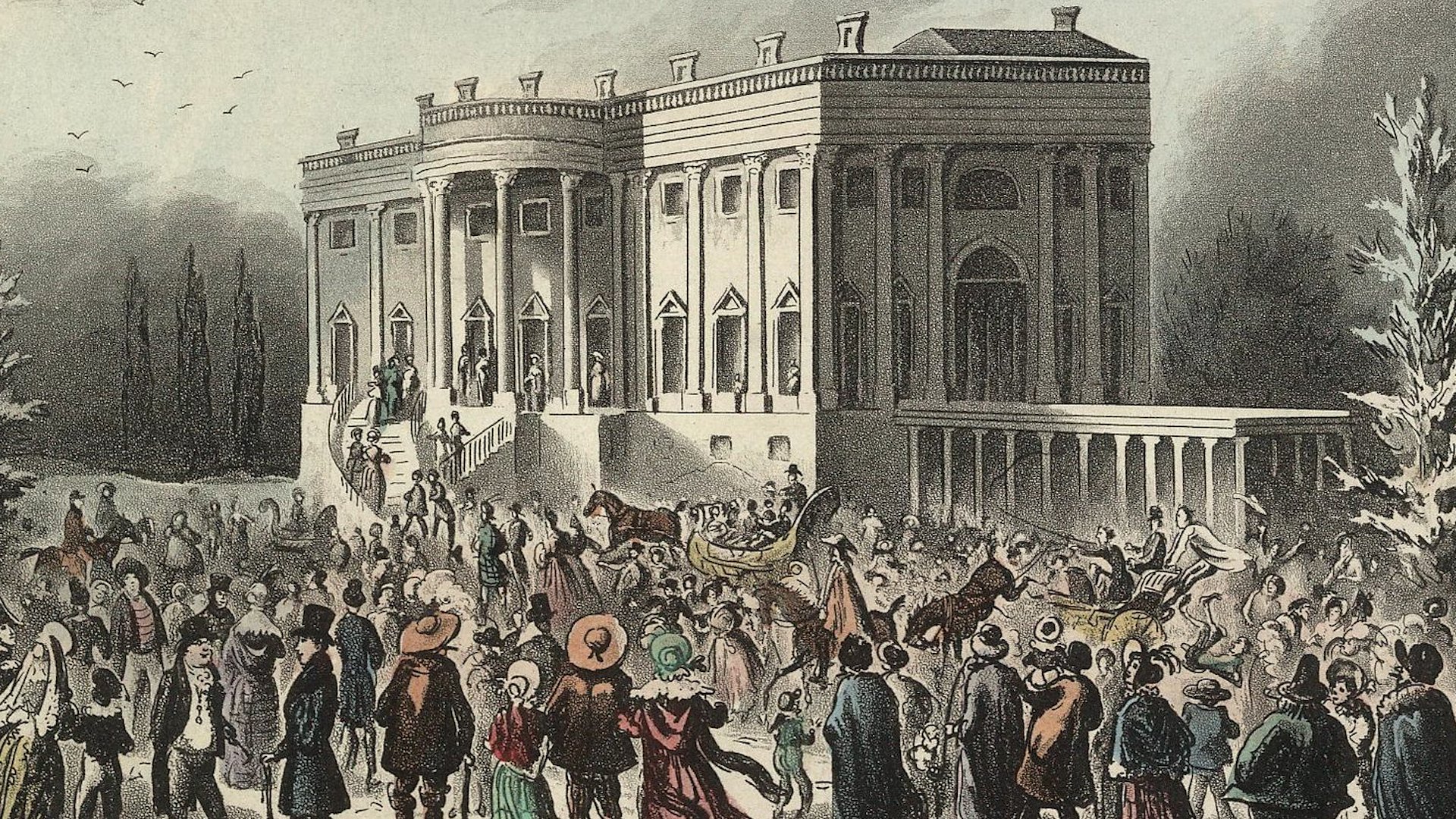
British forces burned the Capitol Building and the White House on August 24, 1814. Dolley Madison rescued a full-length portrait of George Washington before fleeing.
Francis Scott Key wrote what became 'The Star-Spangled Banner' after watching the bombardment of Fort McHenry from a ship in Baltimore Harbor on the night of September 13 to 14, 1814.
The Battle of New Orleans was fought two weeks after the peace treaty had been signed, because news of the Treaty of Ghent hadn't yet reached Louisiana.
Sign up here to be the first to know about new History250 releases, content & resources!
FAQ - Frequently Asked Questions
Q1: What does 'impressment' mean and why did it anger Americans so much?
Impressment was the British practice of forcibly removing sailors from American merchant ships and forcing them into Royal Navy service. Britain claimed it was only reclaiming British deserters, but in practice many American citizens were seized. Estimates suggest thousands of Americans were impressed over the years before 1812. It was widely seen as a violation of American sovereignty and personal liberty.
Q2: Why did some Americans oppose the War of 1812?
Federalists in New England strongly opposed the war, calling it 'Mr. Madison's War.' New England's economy depended heavily on trade with Britain, and a war would devastate it. Some Federalist governors refused to send their state militias under federal command. Opposition was strong enough that the Hartford Convention of 1814 met to discuss constitutional changes and, in some corners, even New England's possible secession from the union.
Q3: Why did the British burn Washington but fail to take Baltimore?
Washington was the capital and a symbolic target, but it was lightly defended and the government had fled. Baltimore was a larger, more commercially important city with a significant fort and a large militia. Fort McHenry's defenders had stretched a chain across the harbor to block British ships from sailing directly to the city. The 25-hour bombardment of Fort McHenry failed to silence the fort's guns, and the British withdrew.
Q4: How did the War of 1812 affect Andrew Jackson's political career?
The Battle of New Orleans made Jackson a national celebrity. His force of frontiersmen, militia, free Black soldiers, and pirates had killed over 2,000 British troops at minimal cost, and the story spread fast. He became known as 'Old Hickory' for his toughness. The fame carried him to the presidency in 1828, and the Battle of New Orleans remained the defining image of his public persona throughout his political life.
Q5: Did the War of 1812 resolve the issues that caused it?
Formally, no. The Treaty of Ghent restored pre-war conditions without addressing impressment, trade rights, or British relations with Native nations. But circumstances changed anyway. The end of the Napoleonic Wars in Europe removed Britain's need to impress sailors or blockade neutral shipping. The practical causes of the war disappeared even though the treaty didn't explicitly resolve them.
Britain's Three Acts of Aggression
With the war for independence, America had successfully broken free from Britain. Yet three decades after the war, the British loomed large as a persistent and aggressive menace to the New Republic. On June 1st, 1812, President James Madison asked Congress to declare war. The House of Representatives voted 79 to 49 in favor of war with the Senate following suit with a vote of 19 to 13. On June 18th, Madison signed the declaration into law.
It was the first time America had officially declared war on another nation. It would prove to be the second war of independence. Leading up to the War of 1812, the British made three major moves of aggression against their former subjects. They blockaded American commercial ships. The British Navy boarded American ships, seized crew members and pressed them into service. And the British supplied arms to Chief Tecumseh and his confederation of Native tribes who were determined to resist American settlers in the Northwest Territory. Tensions on the western frontier had already exploded, as we cover in our episode on Tecumseh, Harrison, and the Battle of Tippecanoe.
Early Defeats and Old Ironsides
American defeats came early in the war. On July 12th, General William Hull and his forces failed in their attempt to invade Canada from Detroit. On July 17th, Fort Mackinac surrendered to British-Canadian forces. A few weeks later, Detroit fell to the British. The first good news came on August 19th when the USS Constitution defeated the HMS Guerriere in a battle on the open sea about 400 miles southeast of Nova Scotia. That victory earned the American ship its permanent nickname, Old Ironsides. During the war, American invasions of Canada were largely unsuccessful. Two exceptions were the battles of York and the Thames. York was the capital of Ontario. The battle there on April 27th, 1813 was an easy win for General Zebulon Pike and his men, but it proved costly. As the British retreated, they set fire to a gunpowder magazine.
When the fire reached the hundreds of powder kegs, a powerful explosion tore through the Americans and wounded or killed over 200 men, including General Pike. Angry American soldiers set fire to businesses and public buildings. On September 10th, Admiral Oliver Hazard Perry led nine American ships in a victory over the British fleet in the Battle of Lake Erie. The Americans now controlled the Great Lake and the supply line for American forces. They would retake Detroit by the end of the month. In the Battle of the Thames in October that year, American General William Henry Harrison led the victorious American forces. Chief Tecumseh, who had been elevated to Brigadier General by the British, died there. The general who would later become president had made his name in this war's final battle, as we cover in our episode on Andrew Jackson and the rise of Jacksonian democracy.
Washington Burns and the Star-Spangled Banner
One of the fiercest battles of the war occurred on July 25th, 1814, the Battle of Lundy's Lane in Ontario. General Winfield Scott led 2,500 Americans to a draw with 3,500 British commanded by General Gordon Drummond. Almost 30% of all the soldiers who fought that day were injured or killed. Both generals suffered serious wounds. In mid-August 1814, the British launched an invasion of Maryland. Their target: America's capital. On August 24th, General Robert Ross and his army of seasoned war veterans roundly defeated the 6,500 Americans commanded by General William Winder. Later that day, Ross and his army easily took Washington, D.C. With the burning of York in their memories, they set the majority of federal buildings on fire, including the U.S. Capitol and the White House. Before they arrived at the president's home, First Lady Dolley Madison had Gilbert Stuart's life-sized portrait of George Washington removed to safekeeping.
She did not want it destroyed by fire, but even more than that, she did not want it in the hands of the British. After vanquishing the District of Columbia, the British set their sights on Baltimore. In the early morning of September 13th, 1814, British forces under the command of Admiral Alexander Cochrane began bombarding Fort McHenry. The attack went on for 25 hours, but the Americans prevailed. The British forces had been repulsed. The scene on the morning of September 14th, when the Americans raised their 30×42-foot garrison flag, inspired Francis Scott Key to write the Star-Spangled Banner.
The Treaty of Ghent and the Battle of New Orleans
The victory at Baltimore proved a turning point in the war. By late 1814, both sides sought peace. The Americans and British signed the Treaty of Ghent on Christmas Eve. The most famous battle of the war, however, occurred after the treaty was signed, on January 8th, 1815.
In the Battle of New Orleans, General Andrew Jackson and 5,700 American troops defended the city from a fortified earthworks of mud and cotton bales on the east bank of the Mississippi River. British General Edward Pakenham led 8,000 veteran troops in a forward assault. In less than 30 minutes, 2,000 of the British fell wounded or dead. Pakenham himself died from American rifle fire. One soldier from Kentucky wrote of what he saw in the aftermath of the Battle of New Orleans: "When the smoke had cleared, and we could obtain a fair view of the field, it looked at first glance like a sea of blood. It was not blood itself, but the red coats in which the British soldiers were dressed. The field was entirely covered in prostrate bodies." So ended America's second war for independence. Within a few years, slavery would force a national reckoning, as we cover in our episode on the Missouri Compromise.